
English| EUR
Suggested for you
More currencies
Choose a language
Almost every visitor to San Pedro de Atacama lands first at El Loa Airport in Calama, then faces a single stretch of desert highway with no towns in between — locally, simply el traslado de Calama a San Pedro de Atacama. This How to Get from Calama to San Pedro de Atacama guide covers the corridor itself: what the road is, when it is open, and when to be on it. The landmarks people come for — the Salar de Atacama, Licancabur volcano, Valle de la Luna — sit beyond it, not on it.
Quick answer
The journey runs along Route 24 and Route 23, a public road transfer open 00:00–23:59 every day of the week and carrying no entrance fee at all — 0 CLP. Travel inside the 08:00–17:00 window, when daylight gives safer driving conditions and clear visibility of the desert scenery. The one caveat: winter nights on the higher ground are cold and unlit.
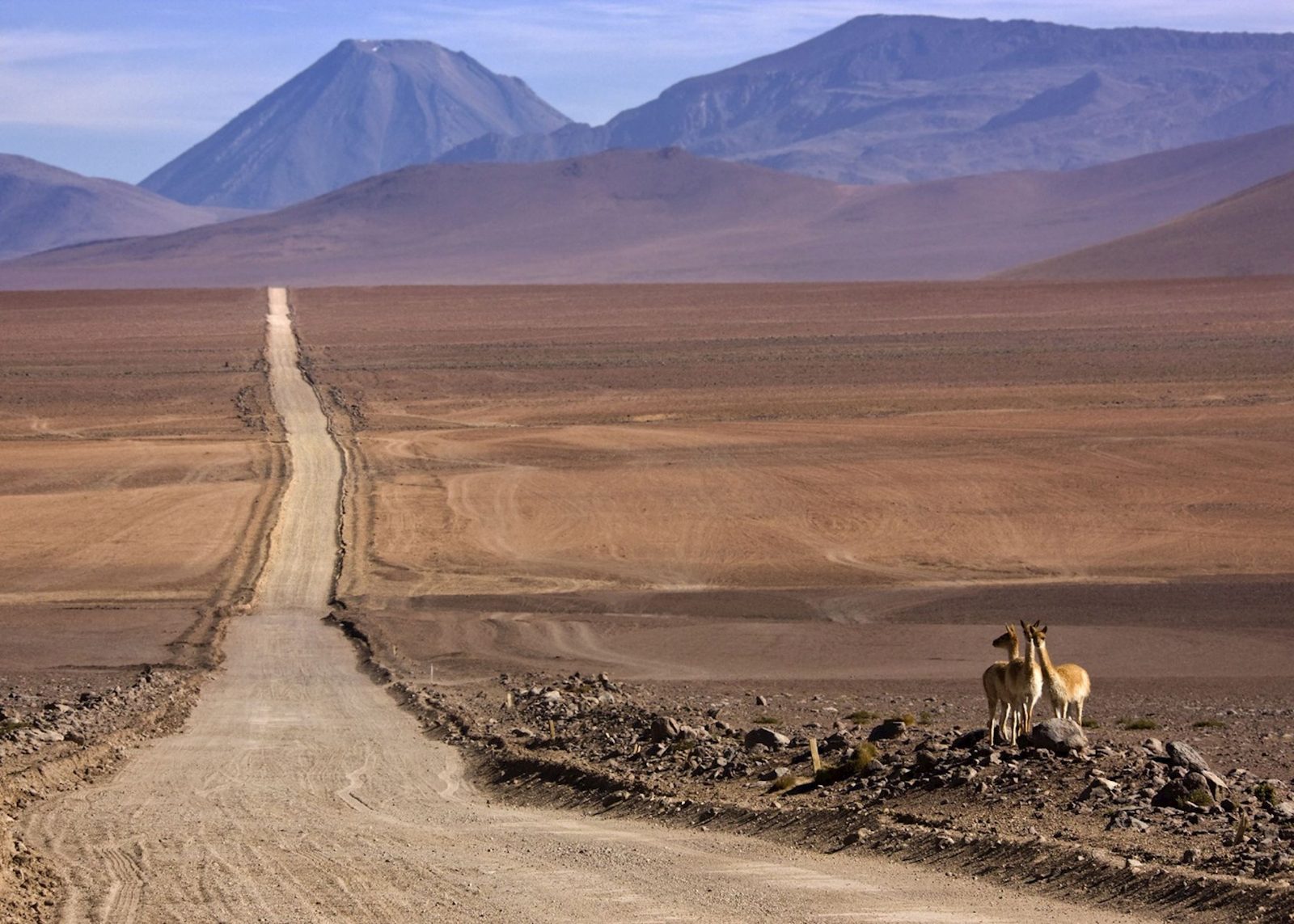
Calama owes its existence to copper. Chuquicamata, the open-pit mine on the ridge above the city, ranks among the largest human excavations on the planet, and the highway grid that serves it is the same grid that carries visitors east into the desert. That industrial inheritance is why the question of how to get from Calama to San Pedro de Atacama has such a straightforward answer: the road is paved, patrolled and heavily used, because mine shifts and freight depend on it. The two places sit in different worlds. Calama is a working city in the Antofagasta Region, flat and gridded, with El Loa Airport on its southern edge. Nearly every Calama airport transfer to San Pedro de Atacama begins there. San Pedro de Atacama, by contrast, is a low-rise adobe village at the northern lip of the Salar de Atacama, Licancabur volcano on the skyline and the Cordillera de la Sal at its back. Between them the land climbs steadily. The Route 24 and Route 23 corridor bends south-east across gravel plains before dropping toward Caracoles street and the village core. Nothing about the drive is technical. What changes is light, temperature and the thinning air. The scenery earns attention on its own terms: Valle de la Luna lies just off the final approach. Most travellers meet this stretch as the first leg of something longer: the multi-day altiplano crossing toward the Uyuni Salt Flats, entered by way of the Hito Cajón pass. Sequencing matters. Onward departures for the salt flats leave San Pedro early, and the altitude asks for a night or two of acclimatisation first. Arranging the traslado de Calama a San Pedro de Atacama for the earlier part of the day therefore does more than improve the view; it protects the following morning. Anyone researching how to get from Calama to San Pedro de Atacama should read the corridor as a buffer, not a race, and build the onward salt-flat legs around it.
“The corridor between Calama and San Pedro de Atacama is a buffer, not a race.”
Calama serves as the primary gateway to San Pedro de Atacama for travelers arriving by air at El Loa Airport. The journey requires traveling via Route 24 and Route 23 to reach the town.
Route 24 and Route 23 from Calama Bus Station
Route 24 and Route 23 from Calama Airport
Route 24 and Route 23
For the safest driving conditions and optimal visibility of the desert landscape, plan your arrival between 08:00 and 17:00.
This procedure takes you from landing at Calama's airport or standing in the city centre to checking in at your accommodation in San Pedro de Atacama, following Route 24 and Route 23 across roughly 100 km of desert. Allow around three hours end to end, including waiting time at the terminal and the drive itself.
Reconfirm your San Pedro transfer or onward tour the day before, and note the pickup point in writing. Travellers most often go wrong by assuming an airport pickup covers the city centre too, when the two departure points are several kilometres apart.
Plan to travel inside the 08:00–17:00 arrival window, since daylight hours offer safer driving conditions and better visibility of desert scenery. The common mistake is booking a late connecting flight into Calama, which pushes the transfer into darkness.
Collect all checked luggage and keep your passport plus any Bolivia onward documents in your hand baggage. People routinely pack their passport in a hold bag, then need it again at the San Pedro hotel or tour desk.
Follow signs to the transfer bay outside the arrivals hall, or go to the terminal counter if you are starting in the city centre. Drivers wait at a marked bay rather than at the terminal door, so ask staff to point it out instead of circling the car park.
The route runs along Route 24 and Route 23, Calama to San Pedro de Atacama, Chile, climbing to roughly 2,400 m. Drink water and avoid heavy food, since the altitude gain over this short stretch catches many travellers off guard.
Tell your driver your accommodation name before departure, as many stop only at the central terminal on Licancabur. Confirming in advance saves you dragging luggage through unlit sand streets on arrival.
Check in, ask about tap water and altitude acclimatisation, and confirm the pickup time for any tour starting the next morning. Guests who skip this conversation often miss an early lobby pickup.
The recommended arrival window for traveling from Calama to San Pedro de Atacama is 08:00–17:00. Navigating this route during daylight hours ensures safer driving conditions and clearer visibility of the desert landscape.
Warm days, 20°C–25°C; occasional rain.
High season brings more travelers to the region. Driving during daylight is advised for road safety.
Mild days, 15°C–22°C; clear skies.
These months offer stable conditions and comfortable temperatures for transit. Daylight remains the priority for visibility.
Cold days, 10°C–18°C; freezing nights.
Visibility is excellent, though morning frost may affect road conditions. Stick to the 08:00–17:00 window for optimal safety.
—
This daily timeframe provides consistent light for navigating the route. Avoid night travel due to limited road infrastructure lighting.
Verdict: For the safest transit and visibility, aim to complete the journey between 08:00 and 17:00 during the shoulder months of April, May, September, or October.
The road route connecting Calama to San Pedro de Atacama remains accessible continuously throughout the week. Travel is possible at any time, day or night, as these public roads do not have restricted operating hours.
The route between Calama and San Pedro de Atacama consists of public roads. Consequently, there are no admission or toll fees associated with traveling this path.
Verdict: Travelers pay 0 CLP to access this route, as it is a public thoroughfare with no entry fees.
A few preparations in Calama make the crossing to San Pedro de Atacama, and the altitude gain that comes with it, far easier to handle.
Everything you need to know about how to get from calama to san pedro de atacama
Most travelers choose shared shuttle services or private transfers when planning how to get from calama to san pedro de atacama. These services operate frequently from the El Loa Airport and provide a direct connection to the town.
When researching how to get from calama to san pedro de atacama, prioritize daylight travel to navigate the desert roads safely. Consistent road maintenance makes this a reliable route for visitors heading toward the Uyuni Salt Flats.
The route is a public road transfer, meaning there is an entrance fee of 0 CLP. You do not need to purchase any tickets for the transit itself.
The best arrival window is 08:00–17:00. These daylight hours offer safer driving conditions and better visibility of the desert scenery.
While there are no traditional bus terminals for local public transport, various shuttle operators provide reliable service for this route. Many visitors coordinate these transfers in advance to ensure seamless connectivity to their desert accommodation.
Yes, many shuttle companies allow you to book airport transfers online. Booking ahead ensures your vehicle is ready upon arrival at the airport.
The journey typically takes about 90 minutes to two hours depending on road conditions and traffic. Please plan accordingly to ensure you arrive within the recommended daylight window.
4-Day Tour from San Pedro de Atacama to Uyuni
Read more Tickets & tours2-Day Tour Options: Atacama to Uyuni
Read more Tickets & toursEnglish-Speaking Tours to Uyuni
Read more GuideUnderstanding the Uyuni Salt Flats Tour
Read more Tickets & tours3-Day Tour from San Pedro de Atacama to Uyuni
Read more Tickets & toursPrivate Tours: San Pedro de Atacama to Uyuni
Read more Tickets & toursSan Pedro de Atacama to Uyuni Transfers & Transport
Read more