English| EUR
Suggested for you
More currencies
Choose a language
Two countries, one dirt corridor, and a destination that looks nothing like its photographs until the last stretch. This San Pedro de Atacama to Uyuni Salt Flats guide sets out what the crossing actually is, what waits at the Bolivian end, and when the salar can be seen properly. The verified figures sit here, not in marketing copy.
Quick answer
The San Pedro de Atacama to Uyuni Salt Flats route ends at Salar de Uyuni, Potosí, Bolivia, where the salt flat is open 00:00–23:59 every day and entry costs 0 BOB. Aim to be on the salt between 05:00 and 18:00, the window with usable daylight. Individual sites within the salar, such as Incahuasi Island, charge separate fees.
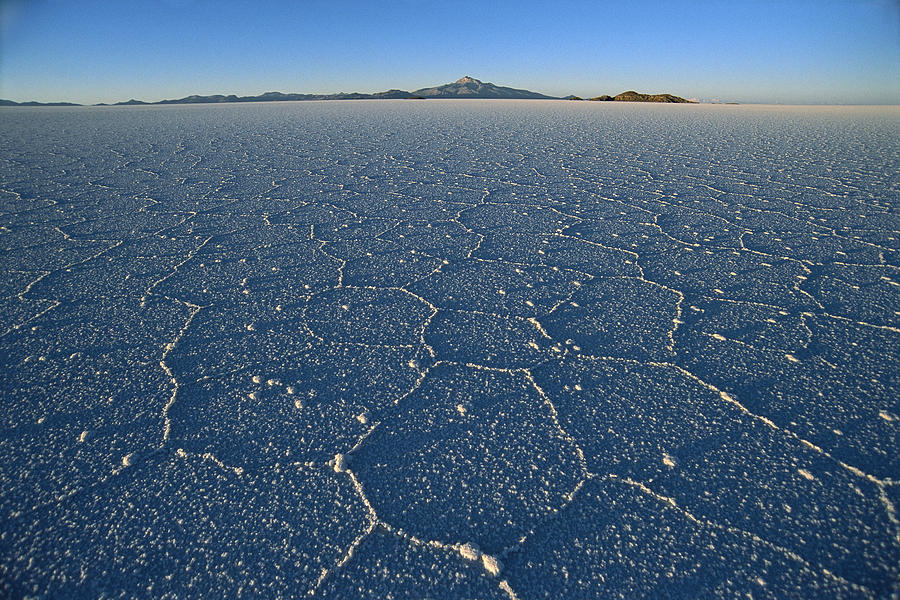
Satellite engineers use the Salar de Uyuni as a ruler. The crust is so level that orbital altimeters are calibrated against it, which makes this the flattest large surface on the planet. Travellers on the San Pedro de Atacama to Uyuni Salt Flats route reach it from the opposite direction — not from orbit, but overland across the Bolivian altiplano, through a landscape that refuses, for most of the way, to look like the postcard. The geography explains the confusion. San Pedro de Atacama sits in Chile; the salar lies in Bolivia, at Salar de Uyuni, Potosí. Between the two runs a corridor of high desert — the Hito Cajón frontier post, then the Eduardo Avaroa Andean Fauna National Reserve — which many travellers cross without realising it is half the point. Laguna Verde sits beneath Licancabur. Laguna Colorada holds flamingos and borax islands. The Sol de Mañana geyser field vents sulphur steam before dawn. The salt flat itself comes last, usually entered near Colchani, where brine is still raked into cones to dry. In practice, the salar is the least regulated part of the journey. There is no turnstile and no closing bell: the published hours run 00:00–23:59, seven days a week. What is regulated is light. The salt expanse only reads as an expanse in daylight, which is why the recommended arrival window falls between 05:00 and 18:00, and why photographs taken outside it record grey haze instead of hexagons. Rain, wind and a driver's willingness to stop matter more than any timetable. Anyone weighing an Atacama to Uyuni tour against the reverse direction should also note that the crossing is one-way by design, and that what happens after arrival differs at each end. This page is a frame, not a checklist. The sections that follow carry the day-by-day sequence, the border and vehicle detail, the seasonal picture and the kit worth carrying. Together they answer what most searchers looking for the San Pedro de Atacama to Uyuni Salt Flats actually want to know: not whether the crossing is possible, but what they are committing to before they reserve a seat.
“The salt flat has no turnstile and no closing bell; what it rations is light.”
This plan suits travellers with three days to spare who want the overland route from San Pedro de Atacama across the Bolivian altiplano to the Salar de Uyuni, arriving at the salt flat within the 05:00–18:00 window when the expanse is clearest. Expect roughly 60 hours door to door, with two nights in basic altiplano lodging.
Transfer up to the Hito Cajón border post, climbing from 2,400 m to about 4,480 m in under an hour. Passport formalities on both sides typically take 45–90 minutes, so eat before leaving.
Two shallow lakes beneath Licancabur volcano, with 20–30 minutes at each viewpoint. The wind picks up by mid-morning and can make the shoreline uncomfortable.
Walk the fumarole field at roughly 4,850 m, the highest point of the route, followed by the Polques hot springs. Move slowly here; the altitude gain from the border is felt most on this stretch.
Late afternoon at the red lagoon inside the Eduardo Avaroa reserve, with flamingos feeding close to shore. Overnight in refuge accommodation nearby at about 4,300 m.
Cross the Siloli desert past the wind-carved rock tree, then a chain of lagoons — Honda, Chiarkota, Hedionda — over roughly five hours of driving. Descent begins here toward 3,700 m.
Arrive at a salt-edge village for the second night, passing the Ollagüe volcano lookout and the Chiguana salt pan en route. Short walk around the village before dark.
Enter the salt flat early, when the crust is coldest and firmest underfoot. Around two hours at the first hexagon fields before continuing.
Climb the cactus-covered coral island, then cross to Colchani and the old rail cemetery, reaching Uyuni town by mid-afternoon.
The journey from San Pedro de Atacama to the Salar de Uyuni spans high-altitude desert terrain crossing the border between Chile and Bolivia. Due to the lack of public infrastructure and hazardous, unpaved road conditions, organized 4x4 transport is the only viable method for this route.
4x4 expedition via Hito Cajón border crossing
4x4 expedition via Ollagüe border crossing
Travelers should plan for an arrival at the Salar de Uyuni between 05:00 and 18:00 to ensure optimal daylight for navigation and photography. Crossing into Bolivia requires mandatory customs and immigration processing at the designated border points.
The best time to visit the Uyuni Salt Flats depends on whether you prioritize land access or the visual effect of a water-covered surface. While the dry season offers full logistical accessibility, the rainy season creates the distinctive mirror reflection.
Cold, arid, clear skies, 5°C to 15°C
Roads are stable, allowing access to the entire salt flat and Incahuasi Island. High visibility makes this period reliable for long-distance travel.
Rainy, humid, cool, 7°C to 18°C
Rain creates the mirror effect on the salt surface. Some areas may become inaccessible due to water accumulation.
—
The best arrival window is 05:00–18:00 to ensure optimal daylight for photography and visibility of the salt expanse.
Verdict: For a balance of weather and accessibility, plan your journey during the shoulder months of April or October, ensuring arrival within the 05:00–18:00 window.
Official access to the Salar de Uyuni is free of charge. Visitors may encounter separate fees when visiting specific geographical landmarks or island attractions located within the salt flat territory.
Verdict: Most travelers pay 0 BOB for the salt flats, but should budget for variable fees at specific sites like Incahuasi Island and national reserves.
The crossing from San Pedro de Atacama to the Salar de Uyuni runs through remote high-altitude terrain with almost no shops, banks or pharmacies along the route, so preparation matters more than on most trips.
Everything you need to know about san pedro de atacama to uyuni salt flats
The journey between these two locations typically spans three to four days depending on the chosen route. Travelers crossing the border should prepare for high-altitude environments throughout the transit.
While entry to the salt flat itself is 0 BOB, some specific sites within the area such as Incahuasi Island charge separate fees. It is advisable to carry local currency in cash for these incidental costs.
The best arrival window for visitors is 05:00–18:00 to ensure optimal daylight for photography and visibility. This timing allows for the best experience across the vast salt expanse.
Traveling with children on a san pedro de atacama to uyuni salt flats itinerary is possible but requires careful planning due to extreme altitudes and long hours in a 4x4 vehicle. Ensure your children are accustomed to travel and have received medical clearance for high-altitude environments.
The biggest mistake is failing to account for the harsh climate and significant altitude changes, which can lead to altitude sickness. Proper acclimatization and adequate hydration are essential for a comfortable journey.
Yes, the area is open daily from Monday through Sunday, 00:00–23:59. You can visit the landscape at any time of the week.
While you do not need a ticket for the salt flats themselves, arranging reliable 4x4 transport for your san pedro de atacama to uyuni salt flats transit is standard procedure. Most travelers utilize established tour operators to manage border crossings and remote logistics.
4-Day Tour from San Pedro de Atacama to Uyuni
Read more Tickets & tours2-Day Tour Options: Atacama to Uyuni
Read more Tickets & toursEnglish-Speaking Tours to Uyuni
Read more GuideGetting from Calama to San Pedro de Atacama
Read more Tickets & tours3-Day Tour from San Pedro de Atacama to Uyuni
Read more Tickets & toursPrivate Tours: San Pedro de Atacama to Uyuni
Read more Tickets & toursSan Pedro de Atacama to Uyuni Transfers & Transport
Read more