72 hr
Three-Day Uyuni Salt Flats Adventure to San Pedro de Atacama
Journey across Bolivia's otherworldly salt desert, colorful lagoons, and high-altitude wonders
Reserve
Hand-picked by our editors — only the best 5 multi-day crossings from 12 reviewed.
Verified partners for every tour, free cancellation where available, and instant confirmation on every booking.
72 hr
Journey across Bolivia's otherworldly salt desert, colorful lagoons, and high-altitude wonders
Reserve
72 hr
Journey through Bolivia's stunning high-altitude deserts, colorful lagoons, and the world's largest salt flat
Reserve
72 hr
Journey across Bolivia's vast salt desert, encounter flamingo-filled lagoons, and cross into Chile
ReservePrices from verified partners. Availability updates in real time at checkout. Free cancellation policies apply where shown.
The landmarks, rooms, and views travelers on this tour remember — all visible on a single visit.
An ancient coral reef remnant covered in giant cacti reaching up to 10 meters in height.
The hexagonal salt patterns cover over 10,000 square kilometers, forming the world's largest salt flat.
Natural vents where subterranean water pushes through the salt crust to create bubbling springs.
Structures constructed entirely from salt blocks located at the edge of the flats.
They serve distinct travel goals; the san pedro de atacama to uyuni transfer is ideal for high-altitude adventure seekers, while local day tours provide convenience for those already in Bolivia.
| Feature | Top pick Cross-Border Transfer | Local Day Tour |
|---|---|---|
Travel Scope |
Three-day expedition | Single-day excursion |
Border Crossing Requirements |
Formal immigration required | None (domestic activity) |
Depth of Landscape Exposure |
High (multiple lagoons and volcanoes) | Focused (salt flat and Incahuasi) |
Physical Demand |
High (sustained elevation) | Moderate (flat terrain walking) |
Logistics Complexity |
High (integrated baggage transport) | Low (centralized meeting points) |
Accommodation Type |
Remote desert lodges | Uyuni city hotels |
| See tickets → |
Verdict: Choosing the right san pedro de atacama to uyuni transfer tour depends on whether you prioritize the journey through Andean landscapes or the simplicity of purchasing local san pedro de atacama to uyuni transfer tickets for a focused destination visit, though many find the multi-day immersion more complete than separate san pedro de atacama to uyuni transfer tours.
Choose your ticket, select your date, and reserve in under two minutes. Secure checkout handled by our verified partner.
Instant confirmation by email, with a mobile voucher you can save offline. No printing, no queuing at a collection desk.
Arrive at the entrance, show your voucher on your phone, and walk in. Most tickets include priority or skip-the-line access.
Practical details for your visit straight from our verified partners — hours, access, rules, and how to get there.
San Pedro de Atacama
Check-in 15 minutes prior
Private or shared 4x4 transfer is the only reliable mode for this route.
Wear thermal layers and windproof jackets as temperatures drop significantly at night. Sturdy hiking boots are recommended for walking on the salt surface.
Use soft-sided duffel bags rather than hard-shell suitcases for easier loading into 4x4 vehicles. Keep essential documents and passports in a secure waterproof pouch.
Bring extra batteries and memory cards as cold weather depletes power quickly. Use a polarizing filter to capture the hexagonal patterns on the salt flats.
The salt flats are a natural landscape and are not wheelchair accessible. Vehicles can navigate the terrain but provide no specialized assistance.
Cellular coverage is non-existent throughout most of the route between the border and the salt flats. Download offline maps and navigation tools before departure.
The journey is long and can be physically demanding for young children. Ensure children are acclimatized to the altitude before starting the trip.
Carry at least three liters of water per person for the journey. Most transfer operators include basic meals, but carrying extra snacks is advised.
Pets are generally not permitted on shared group transfers due to vehicle space constraints. Check with private transport operators for potential exceptions.
Altitude sickness medication is highly recommended for this high-altitude route. Verify all border crossing documents are stamped correctly in both Chile and Bolivia.
Best time to go, insider tips, nearby landmarks, and the cancellation fine print — flip through to skim what matters to you.
How crowds, weather, and events shift across the year.
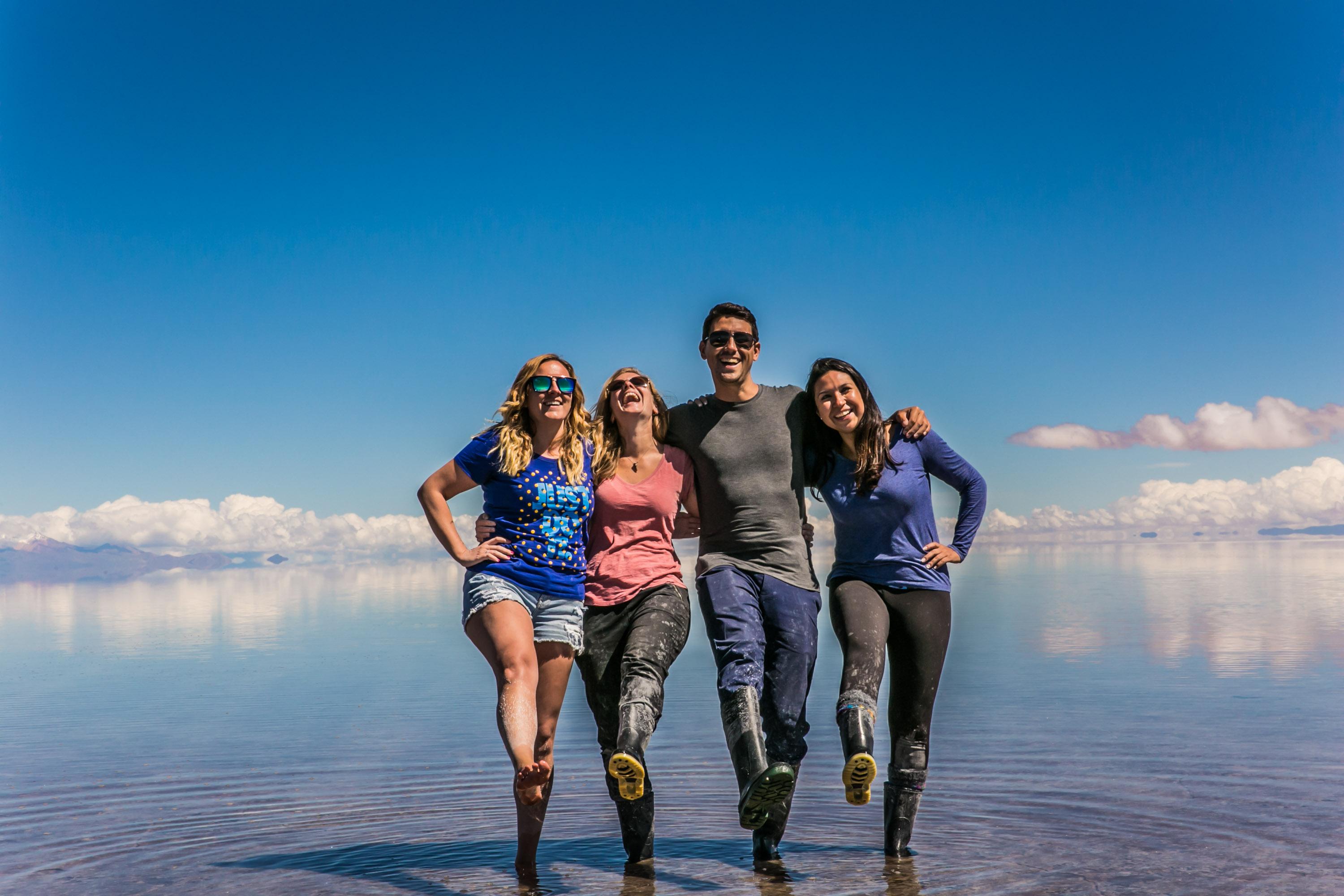
December to March offers the mirror effect when the flats have a thin layer of water. Expect heavy rainfall and potential road closures.
May to October provides dry, solid ground for travel and clear skies for stargazing. Daytime is sunny but nights are sub-zero.
Small details that turn a good visit into a great one.
Spend two nights in San Pedro de Atacama to adjust to the altitude.
Drink water constantly to combat the dry, thin air of the altiplano.
Non-bookable sights within a short walk — free to visit, easy to pair.
A volcanic rock outcrop covered in giant cacti in the center of the flats.
Flexible, no hidden fees.
Full refunds are typically available if cancelled 48 hours before the scheduled transfer. Please consult your specific operator for details regarding the 0 BOB entrance fee policy.
Hand-picked options within walking distance — pick a district for vibe, or a specific hotel for convenience.
Various lodging options ranging from basic hostels to salt-brick hotels.
The 550-kilometer traverse between San Pedro de Atacama and Uyuni was not a tourist route until the early 1990s, when Chilean and Bolivian tour operators negotiated shared 4x4 permits across the Eduardo Avaroa Andean Fauna National Reserve. Before that, the region was known only to flamingo researchers and lithium prospectors. Today, the San Pedro de Atacama to Uyuni transfer remains one of South America's most geographically dramatic overland crossings. The route climbs from the Atacama Desert's 2,400-meter basin to the 4,600-meter Hito Cajón border post, threading between stratovolcanoes and silica-crusted lagoons. The second day typically descends into the Sol de Mañana geothermal field, where sulfur vents hiss at dawn temperatures that reach minus 20 Celsius. The third morning opens onto the Salar de Uyuni itself—10,582 square kilometers of lithium-rich brine capped by a polygonal salt crust that fractures and re-forms with the altiplano's seasonal floods. Travelers cross the expanse in Toyota Land Cruisers, pausing at Incahuasi Island, a fossilized coral outcrop colonized by thousand-year-old cardón cacti. The crossing is not a simple point-to-point transfer. Most three-day itineraries include overnight stops at Laguna Colorada, where iron sediments stain the water rust-red, and at basic salt-brick hostels near the Salar's southern shore. Four-day variants add a descent into the Siloli Desert, known for the Árbol de Piedra, a wind-sculpted volcanic tuff formation. The route's altitude and isolation demand acclimatization—operators recommend spending at least two nights in San Pedro before departure. Border formalities at Hito Cajón involve both Chilean and Bolivian immigration posts separated by 40 kilometers of gravel track. Weather conditions between May and October bring clear skies but nighttime frost; January to March sees afternoon rain that can flood the Salar and create the mirror effect photographers chase. The transfer ends in Uyuni town, a high-altitude railway junction where most groups arrive by midday on the third or fourth day. The town itself is functional—cement-block hotels and tour agencies line the main avenue—but serves as the gateway to the salt flat's northern edge, where dawn departures capture the crust's hexagonal tessellations under horizontal light.
"The route climbs from the Atacama Desert's 2,400-meter basin to the 4,600-meter Hito Cajón border post, threading between stratovolcanoes and silica-crusted lagoons."
A step-by-step walkthrough of the visit — what you'll see, how long each stage takes, and the details that matter.
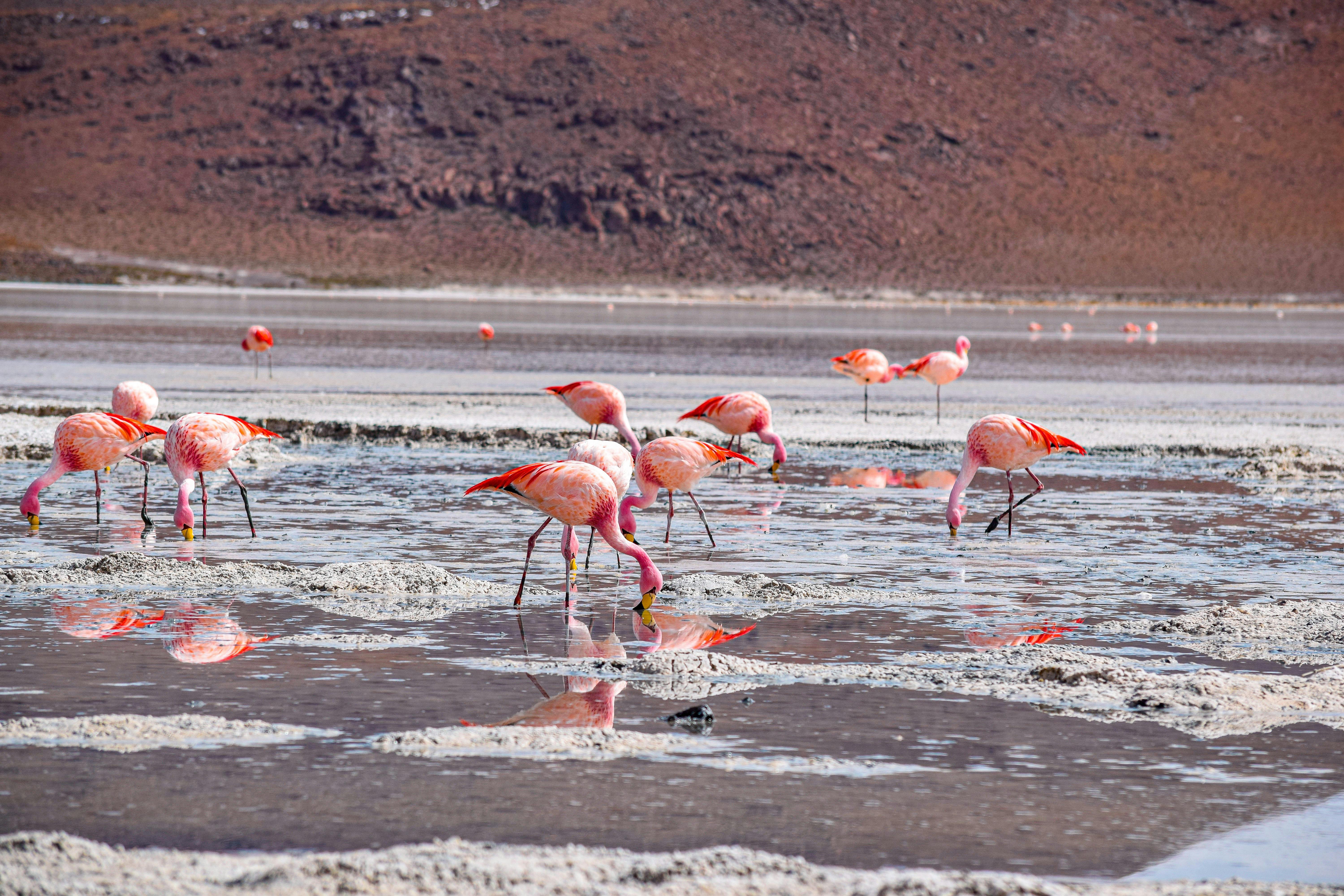
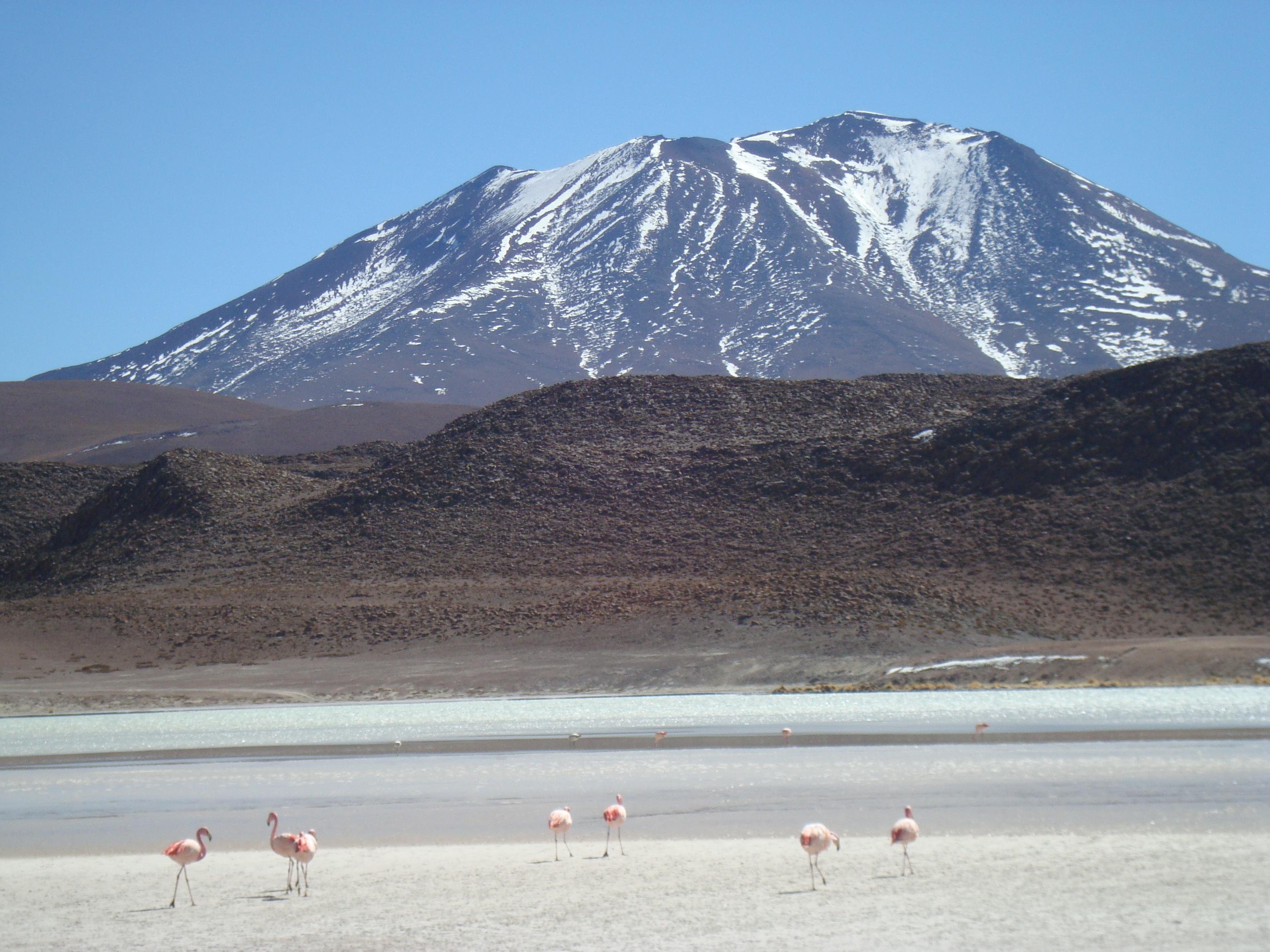
You leave San Pedro de Atacama before sunrise, your 4x4 convoy threading south through the Valle de la Luna's rust-colored badlands. By mid-morning, you reach the Chilean immigration post at Hito Cajón, where wind scours the altiplano at 4,600 meters. After the Bolivian stamp, the track descends into the Eduardo Avaroa reserve. You pause at Laguna Verde, where copper and arsenic tint the water turquoise beneath Licancabur's cone. Day two begins at Sol de Mañana, where you walk boardwalks between bubbling mud pools and sulfur fumaroles. By afternoon, you arrive at Laguna Colorada, its shallows crowded with Andean and James's flamingos. You overnight in a salt-brick hostel with shared bathrooms and kerosene heating. The third morning opens onto the Salar. Your driver steers across the crust's white expanse, stopping at Incahuasi Island for a climb among the cardón cacti. You photograph perspective tricks on the flats, then continue north to the salt-processing mounds and train cemetery outside Uyuni. By early afternoon, you arrive in town, the altiplano wind pushing you toward a warm lunch.
You can travel across the salt flats at any time, with 00:00–23:59 operation.
Access is 0 BOB, though local spots like Incahuasi charge fees.
The best arrival window is 05:00–17:00 to maximize daylight.
You need confirmed bookings which act as your san pedro de atacama to uyuni transfer tickets.
Yes, many operators offer private versions of the san pedro de atacama to uyuni transfer tour.
Bring sunscreen, water, and warm clothing for your san pedro de atacama to uyuni transfer.
Travelers using professional drivers find the route standard, though altitude is a factor.
The trip usually takes 8-10 hours depending on conditions.
Yes, but ensure children are prepared for high-altitude travel during the san pedro de atacama to uyuni transfer.