72 hr
Three-Day Uyuni Salt Flats Adventure from San Pedro de Atacama
Journey across Bolivia's otherworldly landscapes, flamingo-filled lagoons, and the world's largest salt desert
Reserve
Hand-picked by our editors — only the best 5 private expeditions from 47 reviewed.
Verified partners for every tour, free cancellation where available, and instant confirmation on every booking.
72 hr
Journey across Bolivia's otherworldly landscapes, flamingo-filled lagoons, and the world's largest salt desert
Reserve
96 hr
Cross borders into Bolivia to witness the world's largest salt desert, colorful lagoons, and geothermal wonders
Reserve
72 hr
Journey across Bolivia's vast salt plains, volcanic deserts, and colorful lagoons on this cross-border expedition
ReservePrices from verified partners. Availability updates in real time at checkout. Free cancellation policies apply where shown.
The landmarks, rooms, and views travelers on this tour remember — all visible on a single visit.
This island is covered in ancient cacti that can reach over 10 meters in height. It serves as a natural lookout point over the massive salt flats.
Constructed entirely from local salt, these structures demonstrate traditional building techniques. Many hotels feature salt furniture and walls.
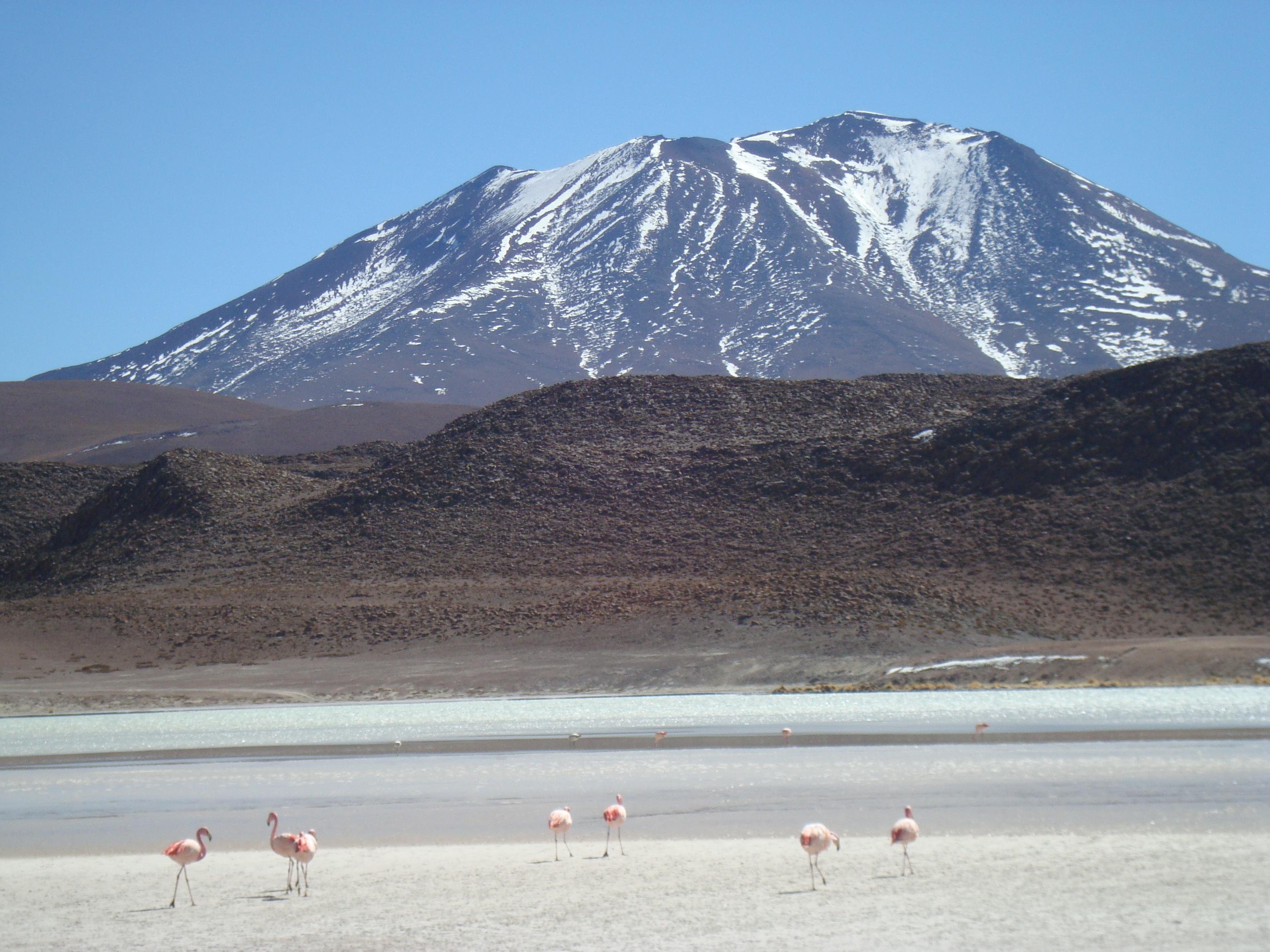
This lake is known for its intense red hue caused by red algae and mineral content. It serves as a primary habitat for several flamingo species.
This geothermal area sits at an elevation of approximately 4,850 meters. It features active volcanic activity including mud pools and steam vents.
These natural salt springs represent the ventilation points of the underground water flow beneath the crust.
The cross-border journey provides a seamless transition between landscapes, whereas the Uyuni round-trip expedition is more efficient for those based entirely within Bolivia. Travelers often find the trans-border route more immersive due to the steady change in volcanic geography.
| Feature | Top pick Trans-Border Private Tour | Uyuni Round-Trip Expedition |
|---|---|---|
Border logistics |
International customs required | |
Total duration |
3 to 4 days | |
Landscape diversity |
High (desert to salt) | |
Altitude acclimatization |
Gradual increase | |
Travel time |
High (frequent stops) | |
Crossing difficulty |
Moderate (border bureaucracy) | |
| See tickets → |
Verdict: Choosing the san pedro de atacama to uyuni private tour is ideal for trans-continental travelers, while the Uyuni round-trip expedition provides simplicity for visitors who already possess san pedro de atacama to uyuni private tour tickets for localized exploration and prefer to avoid international transit on their san pedro de atacama to uyuni private tour tours.
Choose your ticket, select your date, and reserve in under two minutes. Secure checkout handled by our verified partner.
Instant confirmation by email, with a mobile voucher you can save offline. No printing, no queuing at a collection desk.
Arrive at the entrance, show your voucher on your phone, and walk in. Most tickets include priority or skip-the-line access.
Practical details for your visit straight from our verified partners — hours, access, rules, and how to get there.
Office center or hotel lobby
Arrange specific pickup with your operator
Private 4x4 vehicles are the only reliable way to cross the border and the salt flats. Always hire a certified professional for this route.
Wear multiple layers to adapt to significant temperature fluctuations during a san pedro de atacama to uyuni private tour. A windproof jacket and thermal base layers are essential for high-altitude desert climates.
Keep all belongings secure within your transport vehicle during your san pedro de atacama to uyuni private tour. Limit personal items to what is strictly necessary for the multi-day journey.
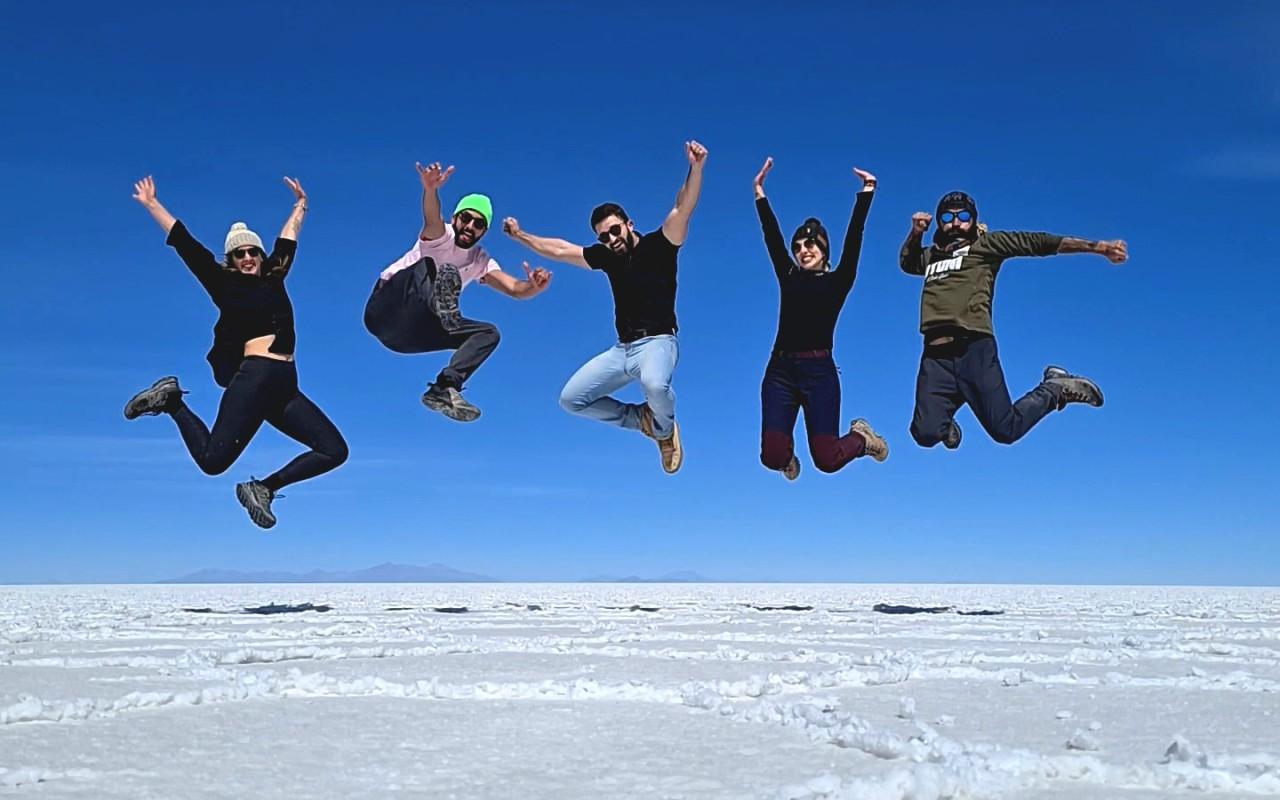
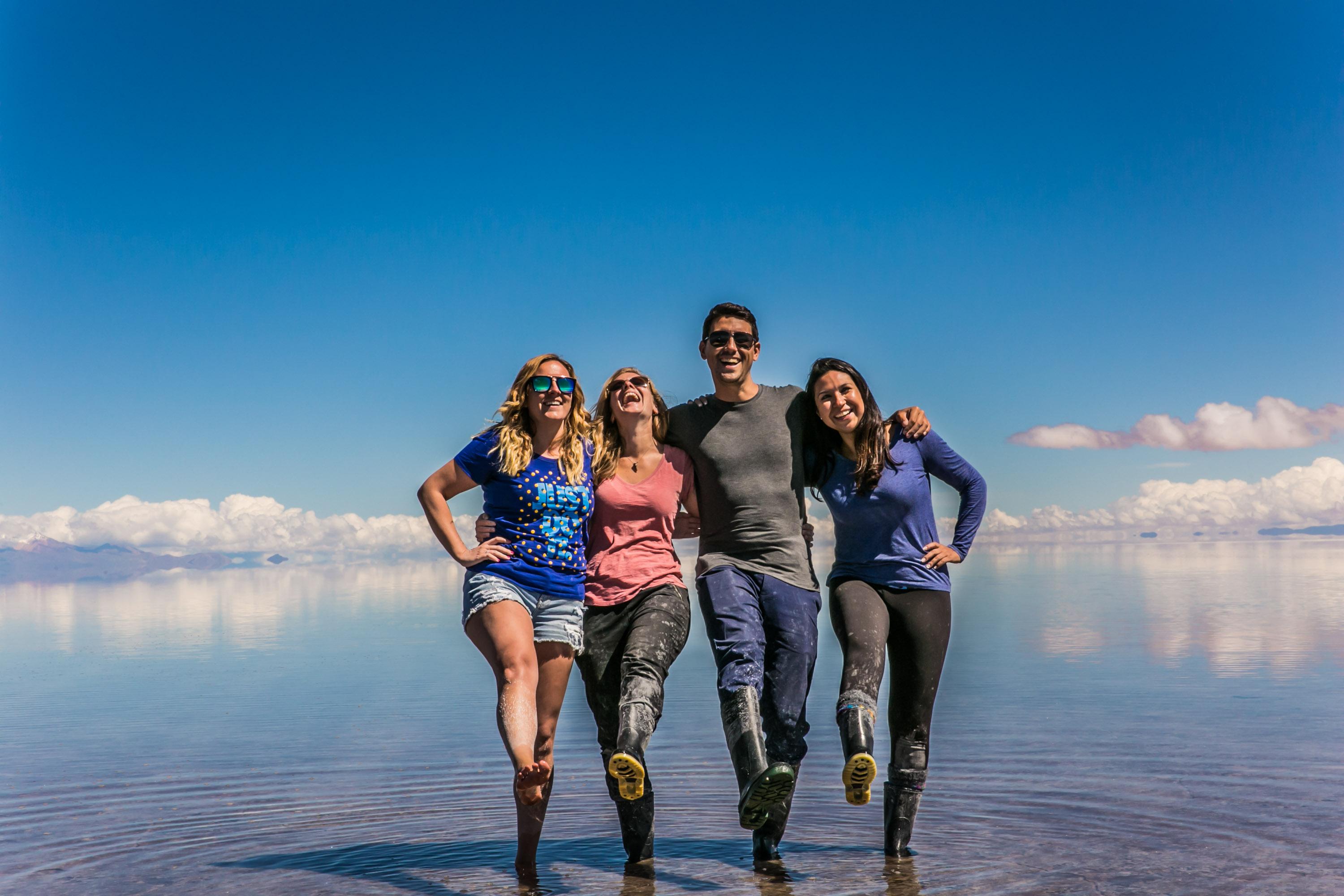
The mirror effect in the Salar de Uyuni requires precise timing during the wet season. A san pedro de atacama to uyuni private tour allows for specialized photography stops away from large groups.
The salt flats present uneven terrain that may be challenging for travelers with limited mobility. Private transport vehicles provide the most stable access method for the Salar de Uyuni.
Families should account for the extreme altitude and long travel times when booking a san pedro de atacama to uyuni private tour. Consult with your operator regarding age-appropriate itineraries.
Hydration is critical due to the arid environment and high altitude. Your san pedro de atacama to uyuni private tour operator typically includes meals, but bringing extra water is advised.
Office center or hotel lobby
Arrange specific pickup with your operator
Get directionsBest time to go, insider tips, nearby landmarks, and the cancellation fine print — flip through to skim what matters to you.
How crowds, weather, and events shift across the year.
The wet season creates the famed mirror effect across the salt flats. Expect sporadic rain and moderate daytime temperatures.
The dry season offers clear, expansive views and stable ground for long-distance travel. Nighttime temperatures drop well below freezing.
Small details that turn a good visit into a great one.
Spend at least two days in San Pedro de Atacama before departing for your san pedro de atacama to uyuni private tour. This helps your body adjust to the rapid elevation gain.
The reflection of sunlight off the salt surface is intense. Always wear high-SPF sunscreen and polarized sunglasses to prevent snow blindness.
Non-bookable sights within a short walk — free to visit, easy to pair.
A rocky outcrop covered in giant cacti located in the heart of the salt flats
A shallow salt lake famous for its red coloration and flamingo populations
A geothermal field featuring bubbling mud pots and sulfuric fumes
Flexible, no hidden fees.
Cancellation rules depend on your specific operator agreement. Standard refunds require notice at least 48 hours prior to departure.
Hand-picked options within walking distance — pick a district for vibe, or a specific hotel for convenience.
A unique hotel built entirely from salt blocks located near the edge of the flats
Central district featuring multiple guesthouses and local amenities
The 500-kilometer traverse from San Pedro de Atacama to the Uyuni Salt Flats crosses one of Earth's most volatile geological seams. The route threads between the Chilean Andes and Bolivia's Altiplano, rising through landscapes shaped by tectonic uplift that began 25 million years ago when the Nazca Plate collided with South America. The resulting high plateau—averaging 3,700 meters above sea level—became a catchment for ancient lakes that evaporated under relentless sun, leaving behind mineral deposits measured in billions of metric tons. The Salar de Uyuni, the world's largest salt flat at 10,582 square kilometers, is the dried remnant of Lago Minchin, which vanished roughly 40,000 years ago. This San Pedro de Atacama to Uyuni private tour became a formal travel corridor only after the Pan-American highway network extended into the southern Altiplano in the 1970s. Before that, the route served as a llama caravan path linking highland mining towns to Pacific trade networks. Today's crossings follow those ancestral tracks through Eduardo Avaroa National Reserve, established in 1973 to protect 714,745 hectares of flamingo lagoons, mineral-stained lakes, and volcanic formations. The reserve's Laguna Colorada holds the world's largest concentration of James's flamingos, a species that filters brine shrimp and diatoms from water so alkaline it burns exposed skin. The geology visible on these private expeditions reads like a tectonic textbook. Sol de Mañana, a geothermal field at 4,850 meters, releases sulfurous steam from fumaroles that reach 200 degrees Celsius. The Árbol de Piedra, a seven-meter wind-carved rock formation, demonstrates the abrasive power of sand propelled by 70-kilometer-per-hour winds. At the Salar de Uyuni itself, the salt crust varies from 10 meters thick at the center to less than one meter at the edges, floating atop a brine lake that holds an estimated 50 to 70 percent of the world's lithium reserves—roughly 9 million tons. The mirror effect that draws photographers occurs only during Bolivia's rainy season, December through March, when a thin water layer transforms the flats into a 129-kilometer-wide reflective plane. Outside that window, the tessellated salt polygons—formed by capillary action and evaporation—create geometric patterns visible from satellite imagery. Private tour operators adapted to demand by offering three- and four-day itineraries, granting flexibility to pause at photographic moments the group tours rush past.
"The Salar de Uyuni holds an estimated 50 to 70 percent of the world's lithium reserves, roughly 9 million tons beneath a salt crust up to 10 meters thick."
A step-by-step walkthrough of the visit — what you'll see, how long each stage takes, and the details that matter.
You depart San Pedro de Atacama before dawn, crossing into Bolivia at the Hito Cajón border post by 8 a.m. Your private 4×4 climbs to 4,300 meters, threading between the twin volcanic cones of Licancabur and Juriques. By mid-morning you reach Laguna Verde, where copper and magnesium tint the water a metallic turquoise that shifts with wind patterns. Your guide stops at the Sol de Mañana geothermal basin—you step carefully around boiling mud pools that hiss and bubble, the air sharp with sulfur. Day two takes you through Eduardo Avaroa Reserve. You walk the shore of Laguna Colorada at noon, counting flamingo colonies through binoculars while your driver prepares a high-altitude lunch of quinoa soup. The afternoon brings the Siloli Desert and its wind-sculpted rock garden, where you photograph the Árbol de Piedra from every angle the light permits. You spend the night in a salt-brick lodge on the Salar's edge, walls and furniture carved from compressed halite blocks. The third morning begins on the Salar itself. You stand at the geometric center, 65 kilometers from any shore, where the horizon dissolves into a single white plane. If the rains have come, you wade through ankle-deep water to capture the doubled sky. Your guide drives to Incahuasi Island by 10 a.m., where thousand-year-old cacti rise from a coral-limestone outcrop—fossil evidence of the ancient lake. You return to San Pedro by evening, or continue north to Uyuni town, depending on your chosen itinerary.
The Salar de Uyuni is accessible 00:00–23:59 daily. Sightseeing is recommended during the 06:00–17:00 daylight window.
Yes, professional operators provide equipped 4x4 vehicles and experienced drivers for the journey.
General access to the salt flats is 0 BOB, though specific attractions within the area may have separate fees.
Yes, you can secure your san pedro de atacama to uyuni private tour through our integrated booking platform.
The mirror effect is best seen during the wet season between December and March.
The terrain is natural salt crust which is rough and uneven; private tours offer the most comfortable transit.
Pack thermal base layers, a heavy jacket, and sturdy shoes for the variable climate.
Prohibited items include single-use plastics and drones without proper permits to protect the ecosystem.
Yes, though families must consider the long transit hours and high altitude before booking.
Most tours include stops at Isla Incahuasi, the salt hotels, and high-altitude lagoons.